
section heading hidden

Our Latest News


Article
- Home
- Blog
- By How to Grow Tomatoes in Containers on a Patio
- Comments 35
- 20 Nov 2026
The Psychology of the Spin: Why We Play Slots, Poker, and Bet
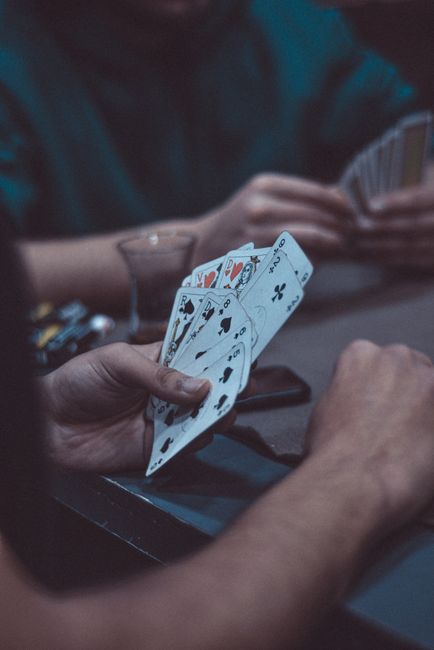
There's a moment every gambler knows intimately. Your finger hovers over the button, the reels are still, and for a split second the entire future feels negotiable. It's not really about the money—or at least, not only about the money. It's about that electric pause between decision and outcome, the same pause that makes a poker player stare down an opponent for two full minutes before folding a hand they desperately wanted to play. The iGaming world runs on that pause. Understanding it is the difference between a casual hobby and a problem, and honestly, between a bad player and a good one.
What Actually Happens in Your Brain When You Hit Spin
Slots are the purest form of gambling ever engineered, because they strip away every variable except chance. No skill, no reads, no bluffing—just a random number generator churning through thousands of combinations per second. So why do they feel so engaging? Because your brain isn't responding to the reels. It's responding to the anticipation of the outcome.
Dopamine, the neurotransmitter most people associate with pleasure, is actually more about prediction and reward-seeking. Studies using fMRI scans have shown that dopamine neurons fire hardest not when a reward arrives, but when a reward is possible and uncertain. Slot machines exploit this with near-misses: two cherries and a blank space landing just one position off a jackpot. Your brain registers that near-miss almost identically to a win, which is why you keep pressing the button after a frustrating loss. Modern video slots like Book of Dead or Sweet Bonanza are designed around this—their bonus rounds hit frequently enough to keep you chasing, but rarely enough to feel genuinely rare.
Contrast that with poker. In Texas Hold'em, the dopamine hit comes from information, not randomness. Reading a tell, calculating pot odds, and making a decision that turns out correct—even when you lose the hand—releases a different kind of reward. This is why poker players often describe the game as a mental sport rather than gambling. The variance is real, but the edge is earnable over thousands of hands.
The Three Species of iGaming Player
After spending enough time in casinos, both online and physical, you start to notice that players fall into rough categories. Knowing which one you are matters more than any betting system you'll read about on a forum.
- The Slot Chaser: Plays for the entertainment value and the dream of the big multiplier. Doesn't track RTP (return to player percentage), doesn't care about volatility, and often plays longer than intended because the game is designed to be frictionless. Budgets are loose, sessions are long.
- The Poker Grinder: Treats the game as a part-time job or a serious hobby. Studies ranges, tracks results in a spreadsheet, and cares about win rate per 100 hands (bb/100) rather than single-session results. Emotional control is the entire skill.
- The Sports Bettor: Lives in the middle—part analyst, part thrill-seeker. Exploits line movement, injury news, and public sentiment. The best ones are profitable; the rest are just fans with a betting app on their phone.
None of these categories is inherently smarter or better than the others. But the slot chaser and the poker grinder need completely different mindsets, and mixing them up is where people get hurt. There is a useful overview at สล็อต.
RTP, House Edge, and the Numbers Nobody Reads
Here's a concrete detail most casual players ignore: not all slot machines are created equal, and not all casinos offer the same versions. A slot's RTP is the theoretical percentage of all wagered money returned to players over millions of spins. A game with 96% RTP has a 4% house edge; one with 94% has a 6%. That two-point difference sounds tiny, but over 10,000 spins at $1 each, it's the difference between losing $400 and losing $600 on average.
Poker is a different beast entirely. In a cash game, the house takes a rake—typically 5% of the pot up to a cap of $3 to $5. Your actual edge depends on the skill of your opponents, not the casino's math. Against weak players, a good grinder can achieve a 5 to 10 bb/100 win rate. Against strong players, even the best in the world hover near break-even. This is why game selection—choosing soft tables—is arguably a more important skill than any advanced strategy.
- Always check the RTP before committing to a slot session.
- Prefer high-volatility slots if you're chasing big wins with a small bankroll; low-volatility if you want longer playtime.
- In poker, leave a table if you can't identify the weakest player within 20 minutes.
- In sports betting, line shopping across three or four books can add 1-2% to your long-term ROI.
Bankroll Management: The Unsexy Skill That Decides Everything
If there's one piece of advice that separates people who enjoy iGaming for years from people who blow their account in a weekend, it's this: your bankroll is not your entertainment budget, and your entertainment budget is not your rent money. Sounds obvious. Almost nobody follows it.
A practical framework: for slots, never risk more than 1% of your total gambling bankroll on a single spin. If you have $500 set aside, your spin size should be $5 or less—ideally closer to $1. For poker cash games, 20 to 40 buy-ins is a standard rule. For tournaments, 50 to 100 buy-ins, because variance is brutal. For sports betting, flat-stake 1-2% of your bankroll per wager and never chase losses with doubled bets.
Chasing is the silent killer. It feels logical in the moment: you've lost $200, so a $400 bet to win it back seems rational. But the math doesn't work that way. Each bet is independent. The house edge doesn't care about your previous losses.
Where the Industry Is Heading (And What It Means For You)
iGaming is evolving fast. Live dealer games are blurring the line between physical and online casinos—real dealers, real tables, streamed in HD, with chat and tipping. Crash games and instant-win mechanics are pulling in a younger audience raised on mobile interfaces. Meanwhile, regulators are tightening: the UK, Sweden, and several US states now require deposit limits, loss limits, and mandatory cool-off periods.
For players, this is mostly good. Responsibility tools work when used honestly. Set a deposit limit before you start playing, not after you've lost. Use session timers. The operators won't do it for you, and frankly, they're not designed to.
The Bottom Line
Slots, poker, and sports betting are not moral failings, and they're not get-rich-quick schemes. They're forms of entertainment with built-in costs, like going to a concert or a nice dinner. The people who enjoy them longest are the ones who understand the math, respect the variance, and treat the whole thing as a budgeted hobby rather than a financial plan. The spin will always be thrilling. The question is whether you're the one spinning, or whether the game is spinning you.
Share:

Creating a Year-Round Container Display for Small Gardens
Learn how reflective surfaces, pale colours and careful lighting can make compact courtyards and balconies feel brighter, deeper and more inviting throughout the day.
5 Comments
-

Robert Sonny says Jul 21, 2024 at 10:00am
I must explain to you how all this mistaken idea of denouncing pleasure and praising pain was born and I will give you a complete account of the system
Reply-

John Abraham says Jul 21, 2024 at 10:00am
I must explain to you how all this mistaken idea of denouncing pleasure and praising pain was born and I will give you a complete account of the system
Reply-

Robert Sonnysays Jul 21, 2024 at 10:00am
I must explain to you how all this mistaken idea of denouncing pleasure and praising pain was born and I will give you a complete account of the system
Reply
-
-
-
Robert Sonny says Jul 21, 2024 at 10:00am
I must explain to you how all this mistaken idea of denouncing pleasure and praising pain was born and I will give you a complete account of the system
Reply
Leave a reply

Trending Topics
Popular Post


How We Can
Help You!
Combine herbs, salad leaves and compact vegetables in a simple layout that keeps harvesting easy and fits neatly beside a patio or back door.
Contact Us
There are many variations of passages of We spend our time finding what works so you don't have to, and sharing exactly what made the difference.
Important Link
Recent Post
-
Improving Heavy Clay Soil in a UK Garden
25 Aug 2026 -
Making Leaf Mould for a Free Soil Improver
22 Aug 2026
Newsletter
Many desktop publi’s shing packages web page editors now is use sites.
Copyright © 2026 Growing Corner. All rights reserved.Growing Corner.